Planning a memorable holiday begins long before you arrive at your destination. From choosing where to go to organizing accommodation, transport, and daily activities, good preparation can make travelling more enjoyable and less stressful.
This travel planning guide explains how to organize a trip in 2027, whether you are preparing for a family vacation, solo adventure, romantic getaway, or international holiday.
Rather than booking everything immediately, successful vacation planning involves understanding your priorities, comparing options, and creating a realistic travel schedule.
Travel Planning Guide: Start With the Right Destination
Choosing a destination is the foundation of a successful journey.
Consider your travel budget, available holidays, preferred weather, interests, and transportation options before making a decision.
Someone interested in beaches may prefer Thailand or Bali, while history lovers might choose Italy, Japan, or Egypt.
Before travelling internationally, check the destination's entry requirements, local regulations, and current travel advice.
Useful resources include the IATA Travel Centre and your destination country's official immigration website.
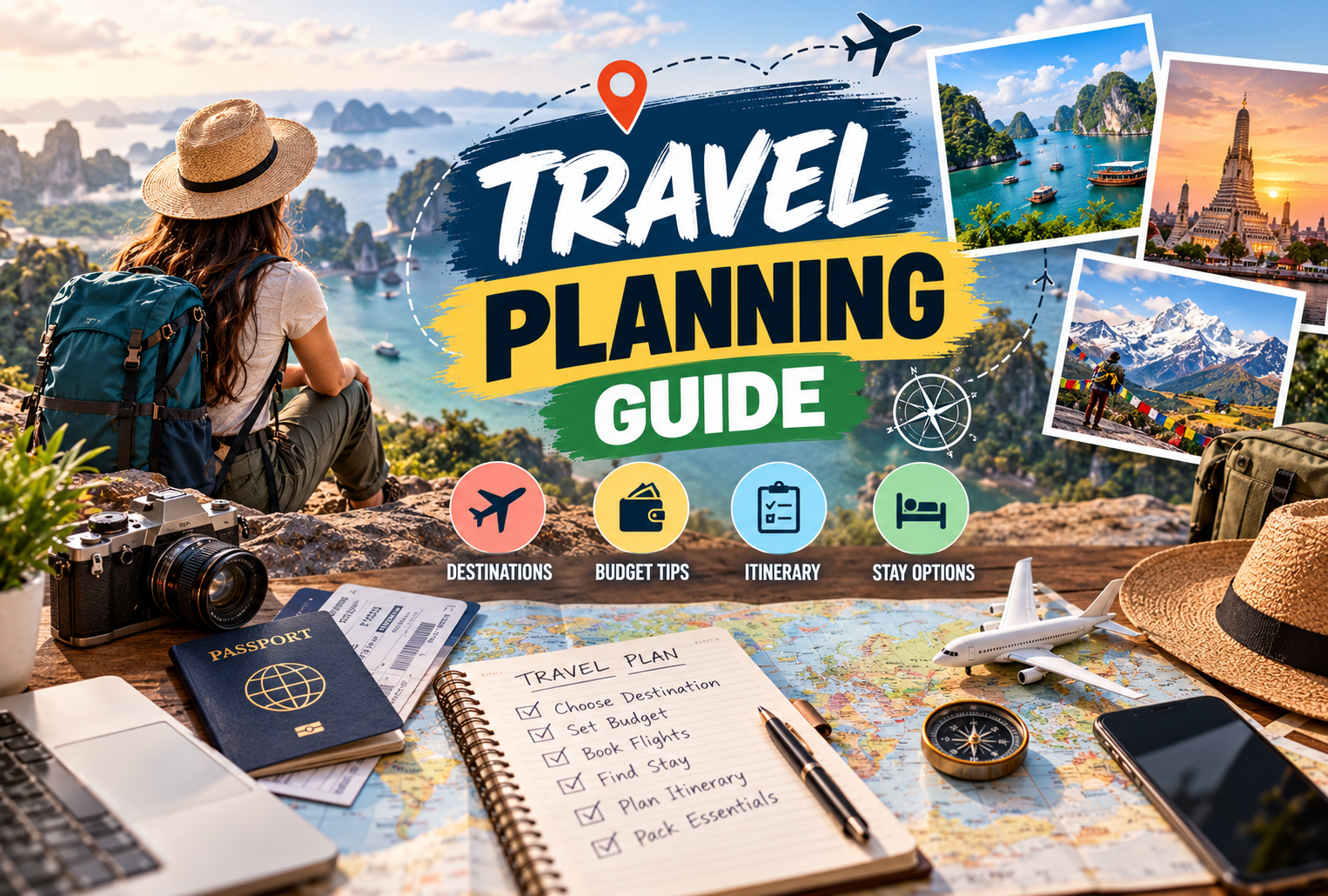
How to Plan a Trip: A Simple Step-by-Step Method
If you are wondering how to plan a trip, follow this practical approach.
Step 1 — Set your budget: Estimate flights, hotels, meals, transportation, sightseeing, and emergency expenses.
Step 2 — Choose travel dates: Consider weather, local festivals, holidays, and tourist seasons.
Step 3 — Research the destination: Identify important attractions, transportation networks, and accommodation areas.
Step 4 — Compare bookings: Review airline schedules, cancellation policies, and hotel locations.
Step 5 — Create your itinerary: Group nearby attractions together instead of travelling across the city repeatedly.
Step 6 — Prepare documents: Check passports, visas, travel insurance, and required confirmations.
Step 7 — Pack carefully: Choose practical clothing and essential items suitable for your destination.
These trip planning tips help create a clear travel plan without making your holiday unnecessarily complicated.
Travel Itinerary Planning: Build a Flexible Schedule
Effective travel itinerary planning balances sightseeing with relaxation.
A common mistake is trying to visit too many attractions in one day. This can lead to exhaustion, rushed experiences, and additional transportation expenses.
For a five-day holiday, consider the following structure:
| Day | Suggested Activity |
|---|---|
| Day 1 | Arrival, hotel check-in, nearby exploration |
| Day 2 | Major attractions and cultural experiences |
| Day 3 | Local markets, food experiences, museums |
| Day 4 | Day trip, nature excursion, or adventure |
| Day 5 | Relaxation, shopping, departure |
Include buffer time for unexpected delays, weather changes, or spontaneous activities.
Booking Flights and Hotels: What Matters Most?
When booking flights and hotels, compare the complete cost rather than focusing only on advertised prices.
Airline tickets may include additional charges for checked baggage, seat selection, meals, or changes.
Hotel rates may exclude taxes, resort fees, or breakfast.
Check the property's location using maps and confirm whether public transport is nearby.
For international travel, consider arrival times carefully. Landing late at night may increase airport transfer expenses.
Booking early can improve availability, but prices vary by route, season, and demand.
International Travel Checklist
An international travel checklist helps prevent important items from being forgotten.
| Category | Essential Items |
|---|---|
| Documents | Passport, visa, tickets, hotel confirmations |
| Financial | Payment cards, suitable local currency |
| Health | Personal medication, prescriptions, insurance details |
| Technology | Phone, charger, power adapter |
| Safety | Emergency contacts, document copies |
| Transport | Airport transfer details, local transport information |
Check passport validity and entry rules for every destination, including transit countries.
The World Health Organization provides general travel health information.
Travel Essentials Checklist: What Should You Pack?
Your travel essentials checklist should reflect the destination's climate and planned activities.
Pack comfortable clothing, suitable footwear, toiletries, required medication, charging accessories, and important documents.
For outdoor trips, consider sun protection, reusable water bottles, and weather-resistant clothing.
Avoid packing unnecessary items that increase luggage weight.
Keep essential documents and valuables in your cabin bag, subject to airline and security rules.
First-Time Travel Tips That Make a Difference
These first-time travel tips can make a new journey easier.
-
Arrive early at airports and transport terminals.
-
Download offline maps before departure.
-
Save emergency contacts and accommodation details.
-
Understand local customs and basic etiquette.
-
Check mobile roaming options or local connectivity.
-
Keep backup payment methods where practical.
-
Review cancellation conditions before paying.
For international trips, monitor official travel advisories close to departure.
Travel Preparation Tips for a Stress-Free Holiday
Good travel preparation tips include checking the weather forecast, informing relevant people about your itinerary, and organizing travel confirmations.
Create digital copies of important documents and store them securely.
Consider travel insurance appropriate to your destination and planned activities.
Avoid scheduling demanding sightseeing immediately after a long overnight journey.
A well-prepared trip still leaves room for discovery.
Final Thoughts
This travel planning guide shows that enjoyable travel depends on more than choosing a beautiful destination.
With realistic budgeting, thoughtful itinerary design, organized documents, and a practical packing checklist, you can travel more confidently.
The goal is not to control every minute of your holiday but to create enough structure to enjoy the experience.
Plan carefully, travel flexibly, and make time for memorable experiences.