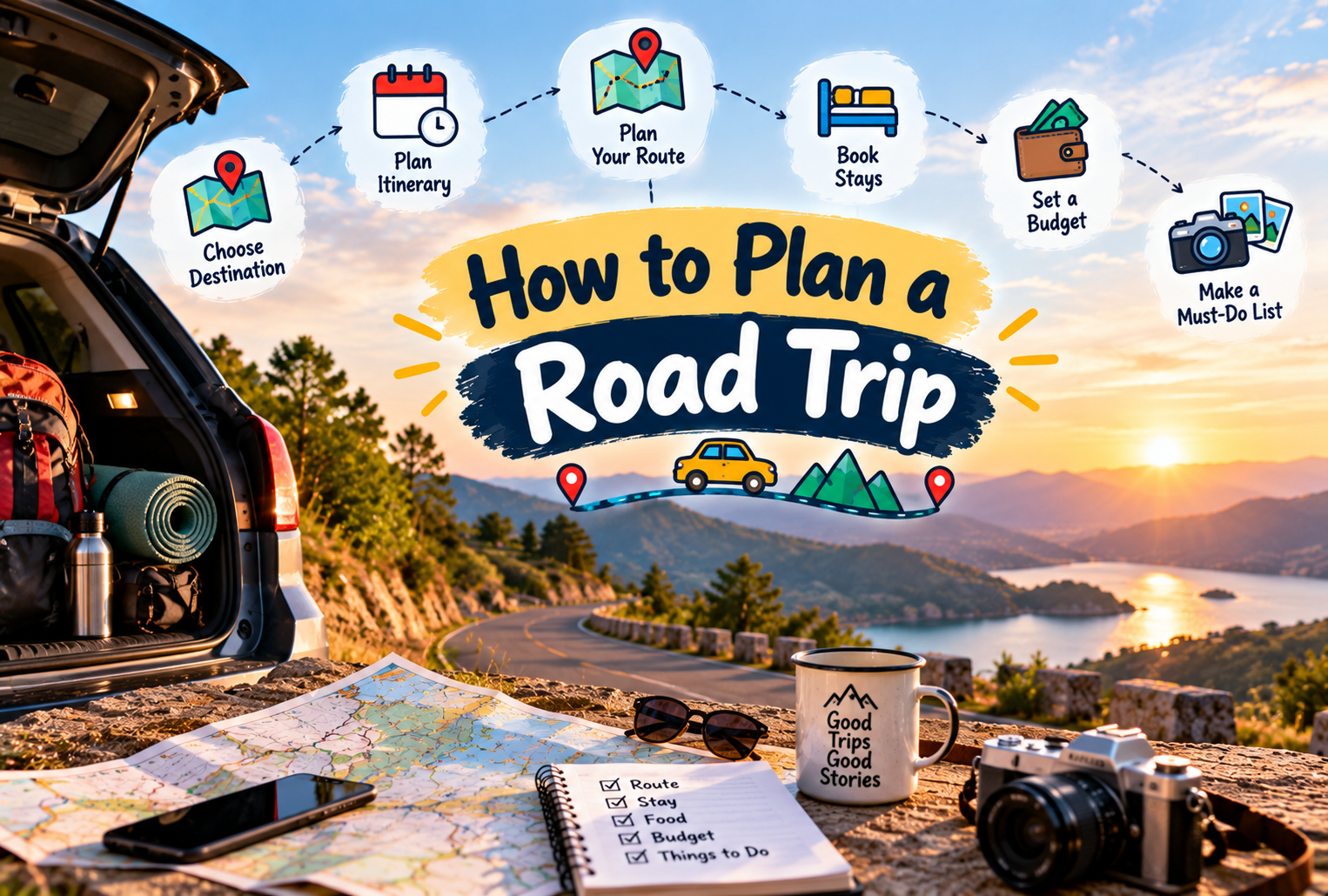
Road trips offer a unique sense of freedom. Unlike flights or organized tours, traveling by road allows you to explore destinations at your own pace, discover unexpected attractions, and enjoy scenic journeys.
Whether you are planning a weekend getaway, a family vacation, or a long-distance adventure, proper preparation can make the experience more enjoyable.
However, an exciting road trip involves more than selecting a destination and starting your vehicle.
Travelers must consider route conditions, fuel expenses, accommodation, rest stops, vehicle maintenance, and safety precautions.
Understanding how to plan a road trip can help you avoid unnecessary expenses, reduce travel-related stress, and create a comfortable journey.
As you prepare for road adventures in 2027, a practical travel plan can help you make the most of every kilometer.
Why Proper Road Trip Planning Is Important
Spontaneous travel can be exciting, but completely unplanned journeys may lead to unexpected problems.
Travelers might encounter unavailable accommodation, unsuitable roads, excessive driving hours, or higher-than-expected expenses.
Good planning provides a basic structure while leaving room for flexibility.
For example, knowing where fuel stations and accommodation options are located can be particularly useful when traveling through remote areas.
Planning also helps drivers estimate realistic travel times rather than relying only on the distance between destinations.
A successful road trip balances adventure with preparation.
Choose the Best Road Trip Routes
Selecting a suitable route is one of the most important decisions when organizing a road journey.
The best road trip routes are not necessarily the shortest.
A slightly longer route may offer better road conditions, scenic views, reliable fuel stations, and interesting attractions.
Consider Your Travel Preferences
Some travelers prefer highways that allow efficient travel between major cities.
Others enjoy mountain roads, coastal drives, countryside routes, or journeys through historical destinations.
Choose a route that matches your interests and driving experience.
Check Road Conditions
Before traveling, review road closures, construction work, seasonal restrictions, and weather forecasts.
Mountain routes may be affected by snow, landslides, or heavy rainfall.
Similarly, rural roads may have limited fuel stations or mobile connectivity.
Use Reliable Navigation Tools
Digital maps can help estimate distances, identify alternative routes, and locate important facilities.
However, navigation information may not always reflect temporary restrictions or changing road conditions.
Verify important route details through reliable local sources when necessary.
Create a Practical Road Trip Itinerary
A well-organized road trip itinerary helps travelers manage time without making the journey feel rushed.
Start by identifying the main destination and the number of days available.
Then divide the journey into manageable driving sections.
For example, a four-day road trip might follow this structure:
|
Day |
Travel Plan |
Main Activities |
|---|---|---|
|
Day 1 |
Departure and first destination |
Scenic stops and local sightseeing |
|
Day 2 |
Explore the destination |
Attractions and cultural experiences |
|
Day 3 |
Travel to another location |
Local food and sightseeing |
|
Day 4 |
Return journey |
Rest breaks and return home |
This is a sample itinerary rather than a fixed route.
Actual driving distances should depend on road conditions, weather, driver experience, and available daylight.
Avoid scheduling long driving periods immediately after physically demanding activities.
Calculate Your Road Trip Budget
Creating a realistic road trip budget is essential for managing expenses.
Major costs generally include fuel, tolls, parking, accommodation, meals, attractions, and vehicle-related expenses.
Before departure, estimate the total distance and identify major planned stops.
Example Road Trip Budget
Consider a hypothetical 1,000-kilometer journey using a car with an average fuel efficiency of 15 km per liter.
Assume fuel costs ₹100 per liter.
|
Expense |
Estimated Cost |
|---|---|
|
Fuel |
₹6,667 |
|
Toll charges |
₹1,500 |
|
Accommodation |
₹6,000 |
|
Food |
₹4,000 |
|
Parking and activities |
₹2,000 |
|
Contingency |
₹3,000 |
|
Total |
₹23,167 |
These figures are illustrative. Actual prices and consumption will vary.
A contingency amount is useful for unexpected expenses such as route changes or additional accommodation.
How to Use a Fuel Cost Calculator
A fuel cost calculator helps estimate one of the most important expenses of a road trip.
The basic calculation is:
Fuel Cost = (Total Distance ÷ Vehicle Mileage) × Fuel Price
For example:
-
Total distance: 1,000 km
-
Vehicle mileage: 15 km/liter
-
Fuel price: ₹100/liter
Estimated fuel consumption:
1,000 ÷ 15 = 66.67 liters
Estimated fuel expense:
66.67 × ₹100 = ₹6,667
Remember that actual mileage can change because of traffic, terrain, air conditioning, vehicle load, and driving habits.
For electric vehicles, estimate electricity consumption in kWh per 100 kilometers and compare charging costs along the route.
Plan Rest Stops and Overnight Stayovers
Long-distance driving can become tiring, particularly when roads are unfamiliar.
Regular rest breaks are important for driver alertness and passenger comfort.
Identify potential stopping points before beginning the journey.
Useful stops may include fuel stations, restaurants, public facilities, and designated rest areas.
Choose Suitable Overnight Accommodation
If the journey requires more than one day, book accommodation in a convenient location.
Consider parking availability, safety, check-in times, and access to the main route.
Avoid selecting a hotel solely because it has the lowest price.
A comfortable overnight stay can help drivers recover before continuing their journey.
Avoid Driving While Fatigued
Fatigue can affect concentration, reaction time, and decision-making.
If you feel sleepy, stop in a safe location and rest.
Do not rely on caffeine, loud music, or open windows as substitutes for adequate sleep.
Pack Important Road Trip Essentials
Preparing road trip essentials in advance can prevent unnecessary inconvenience.
Important items include:
-
Driving license, vehicle registration, insurance, and required permits
-
First-aid kit and personal medications
-
Drinking water and suitable snacks
-
Phone charger and power bank
-
Spare tire or appropriate tire repair equipment
-
Basic vehicle tools and emergency supplies
-
Flashlight and reflective warning equipment
-
Suitable clothing for the destination
-
Offline maps for areas with limited connectivity
-
Emergency contact information
The exact packing requirements depend on the destination, climate, vehicle, and number of passengers.
Travelers heading into remote regions may require additional supplies.
Important Road Safety Tips for 2027
Following practical road safety tips can help reduce avoidable risks.
Inspect Your Vehicle
Before departure, check tire condition, tire pressure, brakes, lights, fluid levels, and windshield wipers.
If the vehicle requires maintenance, complete necessary repairs before starting a long journey.
Follow Traffic Rules
Observe speed limits, road signs, and local traffic regulations.
Avoid aggressive driving and unsafe overtaking.
Wear Seat Belts
All occupants should use appropriate seat belts or child restraints.
Children should travel in suitable seats according to their age, size, and applicable legal requirements.
Avoid Phone Distractions
Do not text, browse social media, or interact with navigation applications while driving.
Set navigation instructions before departure or ask a passenger to manage route changes.
Monitor Weather Conditions
Heavy rainfall, fog, snow, and extreme temperatures may affect driving conditions.
Adjust travel plans when conditions become unsafe.
You can learn more about road traffic safety.
Make Your Road Trip More Enjoyable
A successful road trip should include more than continuous driving.
Allow time to explore viewpoints, local markets, cultural attractions, and interesting food stops.
Create a music playlist, prepare suitable snacks, and include activities for passengers.
Families traveling with children may benefit from games, audiobooks, and regular breaks.
Photography enthusiasts can plan stops at scenic locations while ensuring they park safely.
Remember that some of the best road trip experiences happen unexpectedly.
Leave enough flexibility to enjoy them without disrupting essential travel arrangements.
Common Road Trip Planning Mistakes
Even experienced travelers sometimes overlook important details.
Common mistakes include underestimating driving time, ignoring weather forecasts, carrying insufficient supplies, and failing to inspect the vehicle.
Another mistake is scheduling too many destinations within a limited period.
Trying to cover excessive distances can turn an enjoyable journey into an exhausting experience.
One of the most useful road trip planning tips is to prioritize quality experiences over the number of places visited.
A relaxed journey often provides more enjoyment than an overcrowded schedule.
How to Plan a Road Trip for Different Travel Styles
Different travelers require different approaches.
Families may prioritize comfortable accommodation, convenient facilities, and shorter driving sections.
Couples may prefer scenic routes, peaceful destinations, and flexible sightseeing plans.
Solo travelers should pay particular attention to route familiarity, communication, and emergency preparedness.
Groups of friends may need to coordinate budgets, driving responsibilities, accommodation preferences, and shared expenses.
Regardless of travel style, understanding how to plan a road trip helps travelers make informed decisions.
Conclusion
Road trips provide opportunities to discover new places, experience changing landscapes, and create lasting memories.
However, a memorable journey requires thoughtful preparation.
Choosing suitable routes, calculating fuel expenses, organizing accommodation, scheduling rest stops, and maintaining vehicle safety are all essential steps.
As you prepare for travel in 2027, remember that understanding how to plan a road trip is about creating a balance between freedom and responsibility.
With realistic expectations, a flexible itinerary, and appropriate safety precautions, your next road adventure can be both enjoyable and well-organized.